
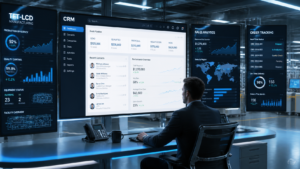
In the LCD display industry, winning long-term B2B clients takes more than manufacturing quality panels. It takes fast communication, organized follow-ups, accurate quotations, and professional after-sales support. Manufacturers that master client management consistently outperform those that rely only on product quality alone.
This is especially true for companies serving complex industries. JWS TFT-LCD supplies display modules across medical, automotive, industrial, security, and commercial applications — all sectors where buyers ask detailed technical questions before placing any order. Managing that sales complexity at scale requires a dedicated system. That system is called a CRM — Customer Relationship Management software.
What Is a CRM and Why Does It Matter for Display Manufacturers?
A CRM is a platform that centralizes client data, tracks every communication, manages sales pipelines, and organizes support tickets — all in one place. For B2B businesses, it replaces scattered spreadsheets, email threads, and chat logs with a single structured workspace.
According to Salesforce research, companies that use CRM systems report up to a 29% increase in sales and a 34% improvement in sales productivity. For manufacturers managing long and complex sales cycles, those numbers represent real revenue impact. Implementing the right CRM solution for growing businesses can be the difference between losing leads and building a reliable client base.
The B2B LCD Sales Challenge
A typical LCD display inquiry involves multiple back-and-forth stages. It starts with receiving the initial inquiry via email, web form, or trade platform, then moves into understanding technical requirements such as screen size, interface, brightness, touch panel capability, and operating temperature. The sales team then recommends the right product from a range of standard and custom display modules, followed by sending pricing and lead time proposals, managing sample shipping and test feedback, and finally closing the bulk order. Without a proper system, this process becomes inconsistent. Replies get delayed, leads fall through the cracks, and sales and engineering teams miscommunicate.
Key CRM Benefits for LCD Display Companies
Centralized Lead Management
LCD manufacturers receive inquiries from multiple channels — trade websites, exhibitions, SEO-driven web traffic, referrals, and direct outreach. A CRM consolidates all of these into one system, allowing your team to tag leads by industry, product type, or region, assign inquiries to the correct salesperson, track each lead from new inquiry to closed deal, and measure which channels bring the highest-quality buyers.
This is particularly valuable for suppliers serving diverse verticals. A company offering both medical-grade LCD panels and automotive dashboard displays needs to route and track different client types without confusion. A centralized CRM makes that seamless.
Faster and More Reliable Follow-Ups
In B2B sales, response speed is a competitive advantage. Buyers often contact several suppliers simultaneously, and the first to respond clearly — and follow up consistently — often wins the order. CRM tools help teams set automated reminders for calls, emails, and quotation deadlines, record every interaction so no conversation is lost, and create workflow tasks for sample approval or engineering review stages.
HubSpot's sales data shows that 80% of sales require five or more follow-ups, yet most sales reps stop after just one or two. A CRM makes consistent follow-up systematic rather than dependent on memory.
Custom Order Tracking and Technical Note Management
LCD display projects are often highly customized. A medical device manufacturer may need a specific brightness rating, IP rating, and interface type. An industrial client may require wide operating temperature ranges. Security access control systems have different size and mounting requirements entirely.
CRM platforms allow manufacturers to store and track technical notes from each client, custom quotation versions, sample shipping records and test feedback, engineering revision logs, and handoff notes between sales and production teams. This keeps every department aligned and reduces the risk of production errors caused by miscommunication.
Distributor and Reseller Account Management
Many LCD display manufacturers work with regional distributors, OEM partners, and resellers across multiple countries. Managing these long-term relationships requires more than occasional emails. A CRM helps track distributor order history and reorder patterns, account activity levels and re-engagement opportunities, territory or product category performance, and communication logs across months or years of partnership.
For companies serving markets across multiple industries and geographies, strong distributor management supported by CRM data can directly impact long-term revenue stability. Learn more about JWS LCD's commercial and security display applications to understand the full breadth of partner markets involved.
After-Sales Support and Repeat Order Planning
The relationship with a B2B client does not end when an order ships. Warranty issues, replacement panels, technical support requests, and reorder planning are all part of the long-term sales cycle. CRM software supports after-sales by tracking open support tickets and resolution status, warranty claim history, product feedback by model or batch, and reorder cycles and average purchase frequency. This allows companies to proactively reach out to clients before they reorder elsewhere, reducing churn and strengthening loyalty.
How CRM Maps to the Full LCD Sales Cycle
When a lead arrives via a website it is automatically logged in the CRM and assigned to a sales representative. As technical discussion begins, notes, specifications, and emails are stored inside the client profile. Once a quotation is sent, an opportunity is created and a follow-up reminder is set. When a sample ships, a task is created for feedback collection. After the order is confirmed, the account moves to the active client stage. Post-delivery support is logged under the same account, and when the reorder cycle approaches, an automated reminder is triggered based on the original purchase date.
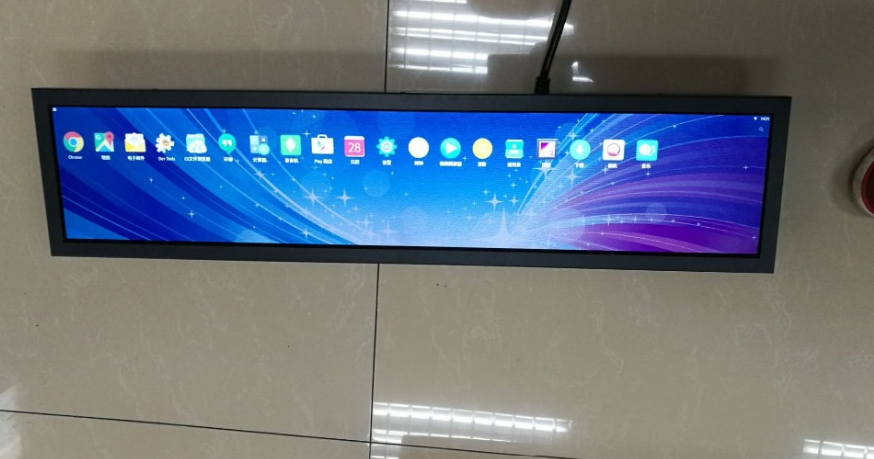
This level of organization would be nearly impossible to maintain with spreadsheets alone, especially as the client base grows. For manufacturers investing in advanced display technology like TFT-LCD touch modules and stretched bar displays, investing equally in client management systems ensures that technical excellence translates directly into business growth.
What to Look for in a CRM for B2B Manufacturing
Not all CRM platforms are designed for manufacturing sales. Consumer-focused tools often lack the flexibility needed for B2B workflows with long sales cycles and technical requirements. The most important features to look for include custom fields to store technical specifications per client, pipeline management with multiple configurable deal stages, email integration to log conversations automatically, task and reminder automation for follow-ups, team collaboration tools so sales and engineering share data, reporting dashboards for pipeline health and conversion tracking, and contact and company hierarchy to manage parent companies and subsidiaries.
For a detailed breakdown of platforms and features, TheGreatCRM is a dedicated resource for comparing and choosing the right CRM solution for growing B2B businesses. Reviewing platform comparisons before committing to a tool can save significant time and switching costs later.
Common Problems CRM Solves for Display Manufacturers
Lost leads are one of the most common problems — inquiries that never received a second follow-up and quietly went to a competitor. Team miscommunication is another recurring issue, where sales quotes different specifications than the engineering team discussed with the client. Many managers also struggle with no pipeline visibility, making it impossible to forecast revenue or identify bottlenecks in the sales process.
Slow support responses hurt client retention when support teams cannot find a customer's order or communication history quickly. Weak distributor relationships form when there is no proactive outreach system to flag inactive partners. Missed reorder opportunities happen when no system exists to remind the team that a client is overdue for a repeat purchase. Every one of these problems is directly solvable through a well-configured CRM.
CRM as a Long-Term Growth Enabler
As LCD display companies scale, the complexity of client management grows faster than a team can handle manually. More product lines, more markets, and more customization requests all demand better systems. A well-implemented CRM creates a foundation for scalable sales processes that work whether you have 10 or 500 active clients, data-driven decisions based on pipeline conversion and lead source trends, stronger client retention through proactive communication and support, and faster onboarding of new sales staff who can access full client history immediately.
According to Nucleus Research, CRM software delivers an average return of $8.71 for every dollar spent. For a B2B manufacturer where each client relationship represents thousands or even hundreds of thousands of dollars in lifetime value, that return compounds significantly over time.
Final Thoughts
LCD display manufacturing is a technically demanding and relationship-driven industry. The companies that grow fastest are not just those with the best panels — they are the ones that communicate better, follow up faster, and manage their clients more professionally over time.
CRM software makes that possible. By centralizing data, structuring sales pipelines, and supporting after-sales service, a good CRM platform turns scattered client interactions into a consistent and scalable business operation. If you are evaluating CRM options for your manufacturing or display supply business, start by reviewing platforms at TheGreatCRM — a resource dedicated to helping businesses find the right CRM match for their sales model and team size.
Contact Us
Tel: +86-755-23059755
Fax:
Address: 2302, Building A, Lechuanghui Building, No. 1211 Guanguang Rd, Guanlan St, Longhua Dist, Shenzhen, China